




INTRODUCTION:
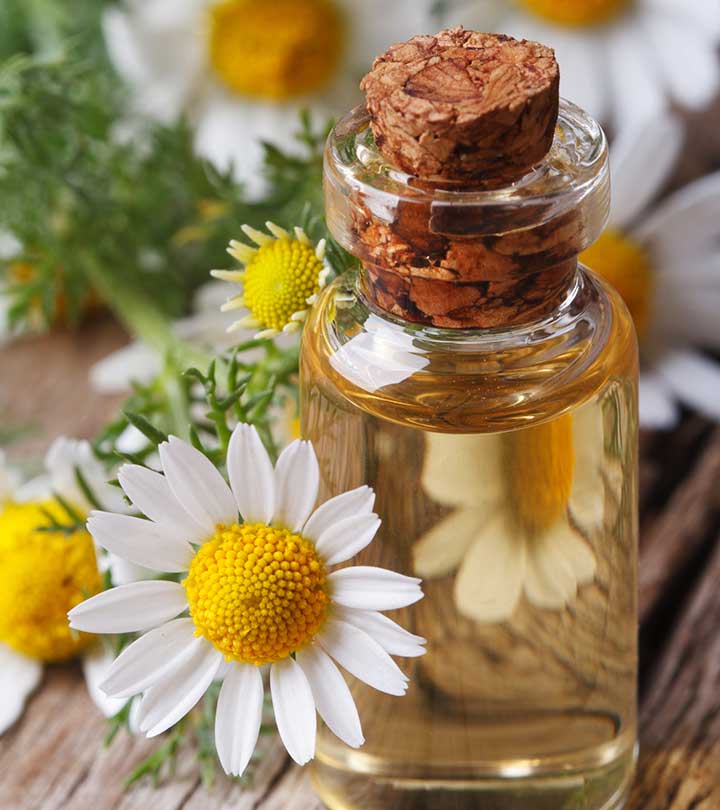
Chamomile Oil is a soothing herbal essential oil extracted from the flowers of the chamomile plant, most commonly Matricaria chamomilla (German chamomile) and Chamaemelum nobile (Roman chamomile). It belongs to the Asteraceae (daisy) family and has been used for centuries in traditional herbal medicine for its calming, anti-inflammatory, and skin-healing properties.The oil is typically obtained through steam distillation of fresh or dried chamomile flowers. German chamomile oil is known for its deep blue color due to the presence of chamazulene, while Roman chamomile oil is usually pale yellow with a sweet, apple-like fragrance.
FORMS:

Essential Oil
This is the most concentrated form, obtained through steam distillation of chamomile flowers such as Matricaria chamomilla and Chamaemelum nobile.
Highly potent
Used in aromatherapy, massage (with carrier oil), and topical applications
Must be diluted before applying to skin
Carrier-Infused Oil
Chamomile flowers are infused into a base oil such as coconut oil, olive oil, or almond oil.
Milder than essential oil
Suitable for direct skin and hair application
Commonly used for sensitive skin
Chamomile Oil Capsules
Available as dietary supplements in softgel form.
Used for digestive support and relaxation
Should be taken under professional guidance
Cosmetic and Skincare Products
Chamomile oil is included in:
Creams
Lotions
Serums
Baby oils
Hair oils
Therapeutic Blends
Often blended with other essential oils for:
Stress relief
Sleep support
Muscle relaxation
Skin treatment
HEALTH BENEFITS:

1. Reduces Stress and Anxiety
Chamomile oil exhibits mild sedative and anxiolytic effects. Inhalation may help regulate the nervous system, reduce tension, and promote emotional balance.
2. Promotes Better Sleep
Its calming aroma supports relaxation and may help manage insomnia and disturbed sleep patterns.
3. Anti-Inflammatory Properties
Rich in bioactive compounds such as chamazulene and bisabolol, chamomile oil helps reduce inflammation, redness, and swelling.
4. Soothes Skin Irritations
It is beneficial for:
Eczema
Dermatitis
Rashes
Minor burns
Sunburn
Its anti-inflammatory and antimicrobial properties support skin healing.
5. Relieves Digestive Discomfort
When used appropriately (such as diluted for abdominal massage), it may help ease:
Indigestion
Gas
Bloating
Mild stomach cramps
6. Supports Wound Healing
Chamomile oil may assist in faster healing of minor cuts and wounds due to its antimicrobial and regenerative effects.
7. Eases Muscle and Joint Pain
Its antispasmodic and analgesic properties can help relieve muscle cramps, arthritis discomfort, and body aches when used in massage blends.
8. Supports Women’s Health
Traditionally used to help manage menstrual cramps and mood fluctuations associated with PMS.
HOW TO USE:
1. Aromatherapy (Inhalation)
For stress, anxiety, and sleep support:

Add 3–5 drops to a diffuser filled with water.
Inhale the vapor for 20–30 minutes.
Alternatively, place 1–2 drops on a tissue and inhale gently.
2. Massage Application
For muscle pain, cramps, or relaxation:
Dilute 3–5 drops of chamomile essential oil in 1 tablespoon (15 ml) of a carrier oil such as coconut, almond, or olive oil.
Massage onto the affected area.
Recommended dilution: 1–2% for adults.
3. Skin Care Use
For irritation, redness, or dryness:
Mix 1–2 drops with a moisturizer or carrier oil before applying.
Apply to clean skin.
Perform a patch test before full use.
4. Bath Therapy
For relaxation and body aches:
Mix 5–8 drops with 1 tablespoon of carrier oil or milk.
Add to warm bath water.
Soak for 15–20 minutes.
5. Abdominal Massage (Digestive Support)
For bloating or mild cramps:
Dilute 2–3 drops in 1 tablespoon carrier oil.
Massage gently in clockwise circular motions on the abdomen.
6. Hair and Scalp Use
For scalp soothing and shine:
Add 2–3 drops to your regular hair oil.
Massage into scalp.
Leave for 30–60 minutes before washing.