


INTRODUCTION:
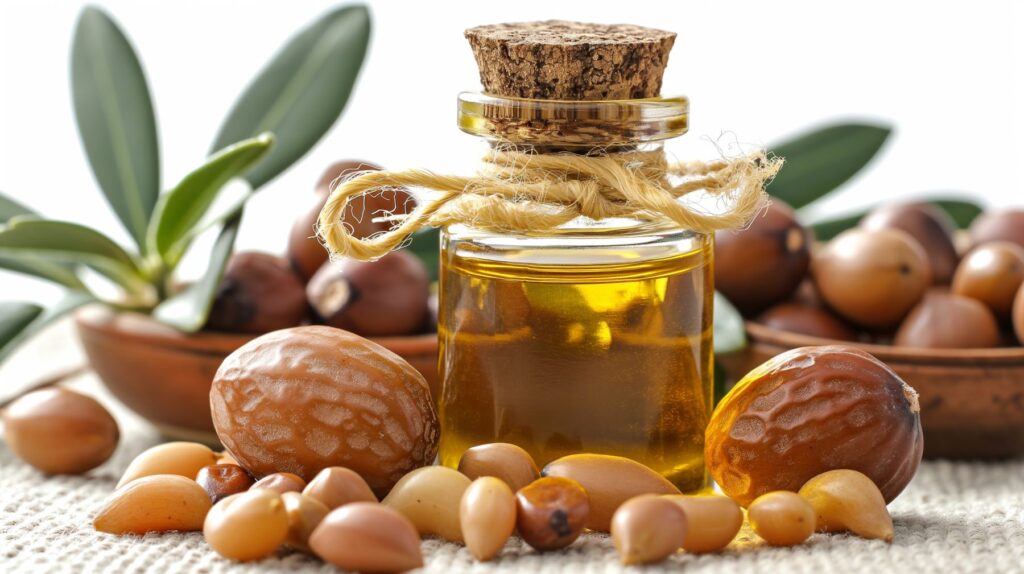
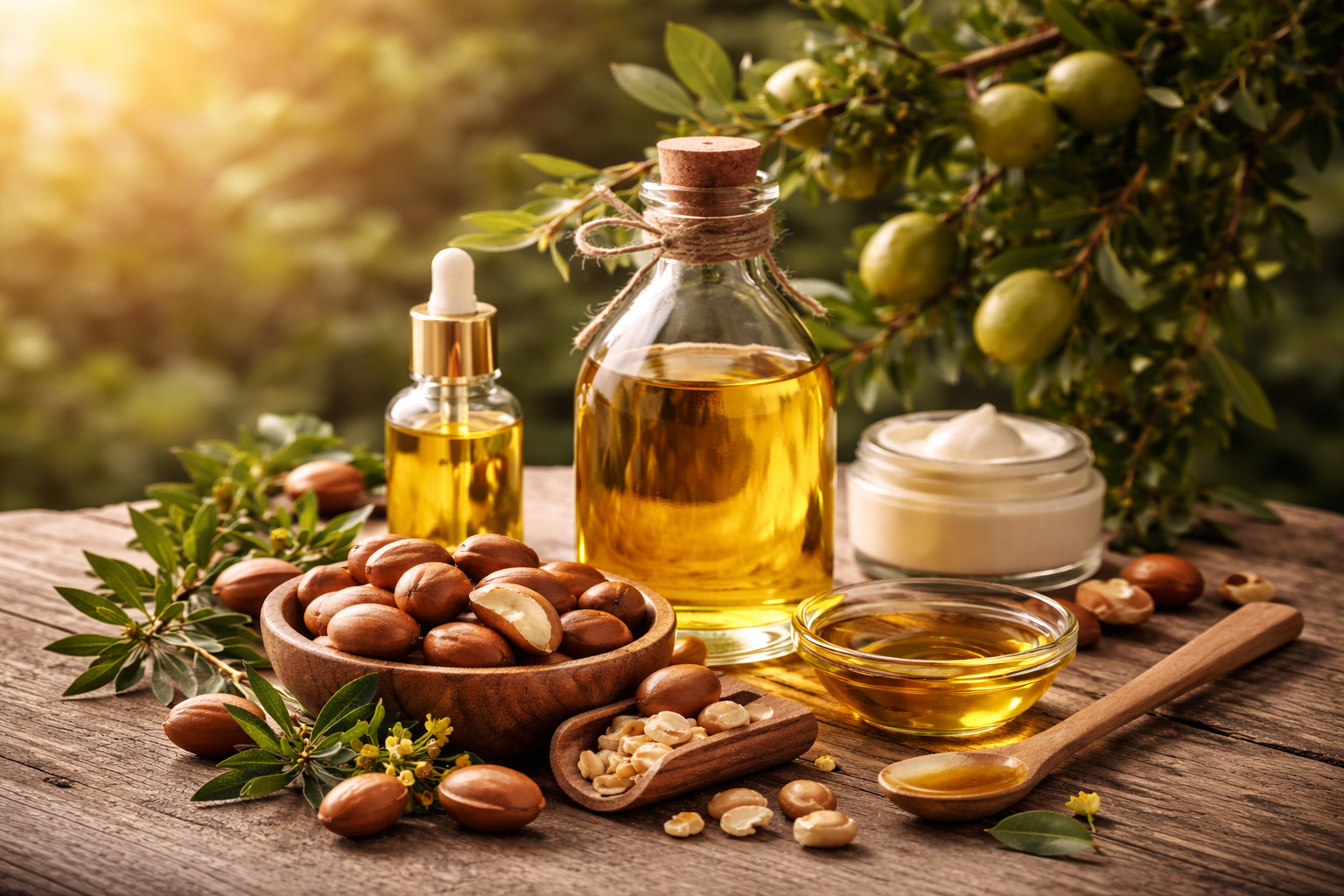
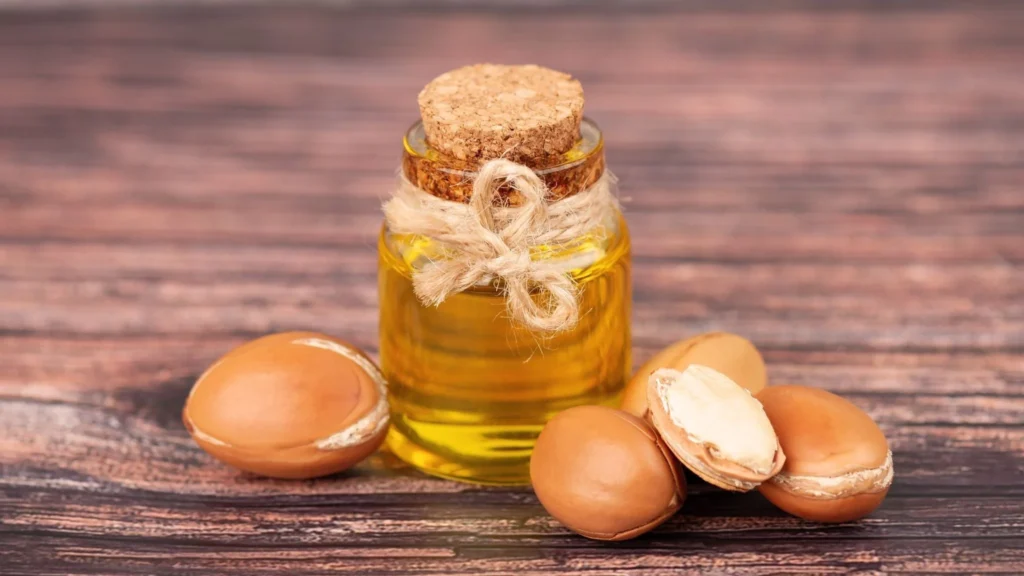
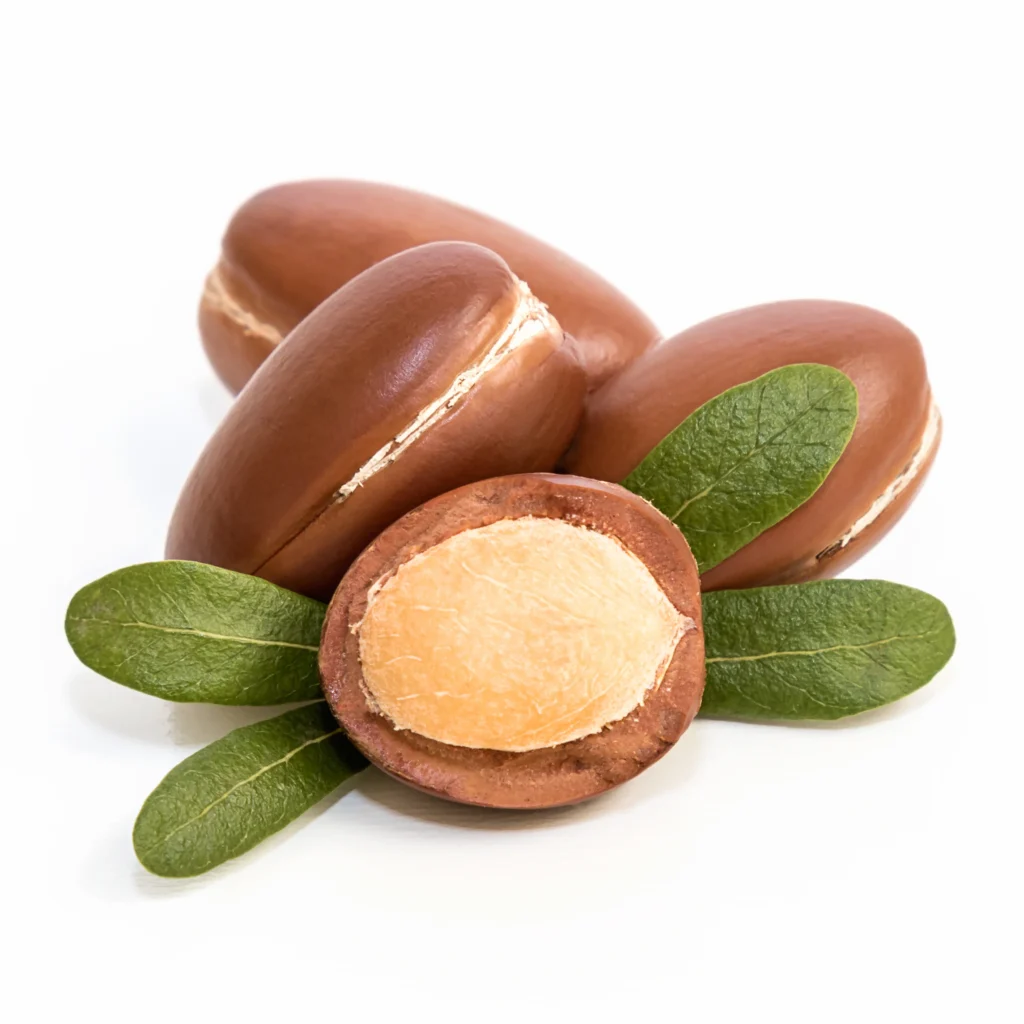
Argan Oil is a premium natural oil extracted from the kernels of the Argania spinosa, a tree native to Morocco. Often referred to as “liquid gold,” this oil has been used for centuries in traditional Moroccan beauty and wellness practices due to its exceptional nourishing and protective properties.Rich in essential fatty acids (especially oleic and linoleic acid), vitamin E (tocopherols), antioxidants, and sterols, argan oil is widely valued for its ability to deeply moisturize, repair, and protect skin and hair. It is lightweight, non-greasy, and easily absorbed, making it suitable for all skin types, including sensitive and acne-prone skin.
FORMS:
1. Pure Cosmetic Argan Oil
Cold-pressed oil extracted from unroasted kernels of the Argania spinosa.
Used for skin, hair, and nails
Light texture and mild nutty aroma
Free from additives (if 100% pure)
2. Culinary Argan Oil
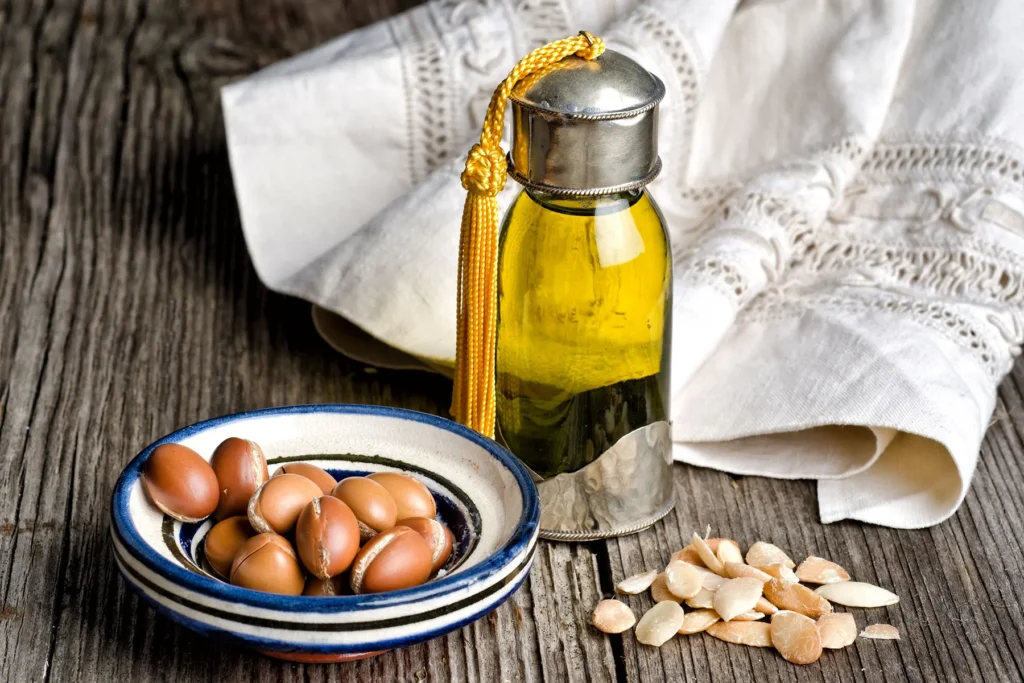
Made from roasted kernels of Argania spinosa.
Rich, nutty flavor
Used in traditional dishes in Morocco
Added to salads, bread dips, and amlou (Moroccan spread)
3. Argan Oil Capsules
Soft gel capsules for dietary supplementation
Used for internal support (consult healthcare professional before use)
4. Argan Oil–Infused Products
Shampoos and conditioners
Hair serums and masks
Face creams and moisturizers
Body lotions
Lip balms
5. Organic / Cold-Pressed Argan Oil
Extracted without heat or chemicals
Retains maximum nutrients
Preferred for premium skincare use
HEALTH BENEFITS:

1. Supports Heart Health
Argan oil is rich in oleic and linoleic acids, which may help:
Reduce LDL (bad cholesterol)
Increase HDL (good cholesterol)
Support overall cardiovascular function
When used as part of a balanced diet, it may contribute to improved lipid profiles.
2. Powerful Antioxidant Protection
High levels of vitamin E and polyphenols help:
Neutralize free radicals
Reduce oxidative stress
Support cellular health
3. Anti-Inflammatory Properties
Natural compounds in argan oil may help reduce inflammation, which can support:
Joint comfort
Skin conditions linked to inflammation
Overall immune balance
4. Supports Skin Health
Topical use may:
Improve skin hydration
Enhance elasticity
Reduce signs of premature aging
Support healing of minor skin irritation
5. Promotes Hair & Scalp Health
Argan oil helps:
Reduce dryness and frizz
Strengthen hair strands
Nourish the scalp
Reduce breakage and split ends
6. May Support Blood Sugar Balance
Some research suggests argan oil may help improve insulin sensitivity, though more studies are needed.
7. Strengthens Nails
Regular application can:
Reduce brittleness
Improve nail flexibility
Nourish cuticles
When consumed in culinary form or applied topically, argan oil offers both internal and external health advantages. However, it should be used in moderation, and individuals with allergies should consult a healthcare professional before internal use.
HOW TO USE:
1. For Skin (Moisturizer)
Apply 2–3 drops of pure cosmetic argan oil to clean, slightly damp skin.
Gently massage in circular motions until absorbed.
Use once or twice daily (morning and night).
Tip: Suitable for face, neck, hands, and dry areas like elbows and knees.
2. For Acne-Prone Skin
Apply 1–2 drops after cleansing.
Use at night to help balance natural oil production.
Always perform a patch test first.
3. For Hair (Leave-In Treatment)
Rub 2–5 drops between palms.
Apply to damp or dry hair, focusing on mid-lengths and ends.
Avoid roots if you have oily scalp.
Benefit: Controls frizz, adds shine, and reduces split ends.
4. As a Deep Hair Mask
Warm a small amount of argan oil.
Massage into scalp and hair.
Leave for 30–60 minutes (or overnight).
Wash with mild shampoo.
Use 1–2 times weekly.
5. For Nails & Cuticles
Apply 1 drop to each nail.
Massage gently before bedtime.
Use regularly to reduce brittleness.
6. For Culinary Use
Use culinary argan oil (from roasted kernels):
Drizzle over salads.
Add to yogurt or smoothies.
Use as a dip with bread.