



INTRODUCTION:
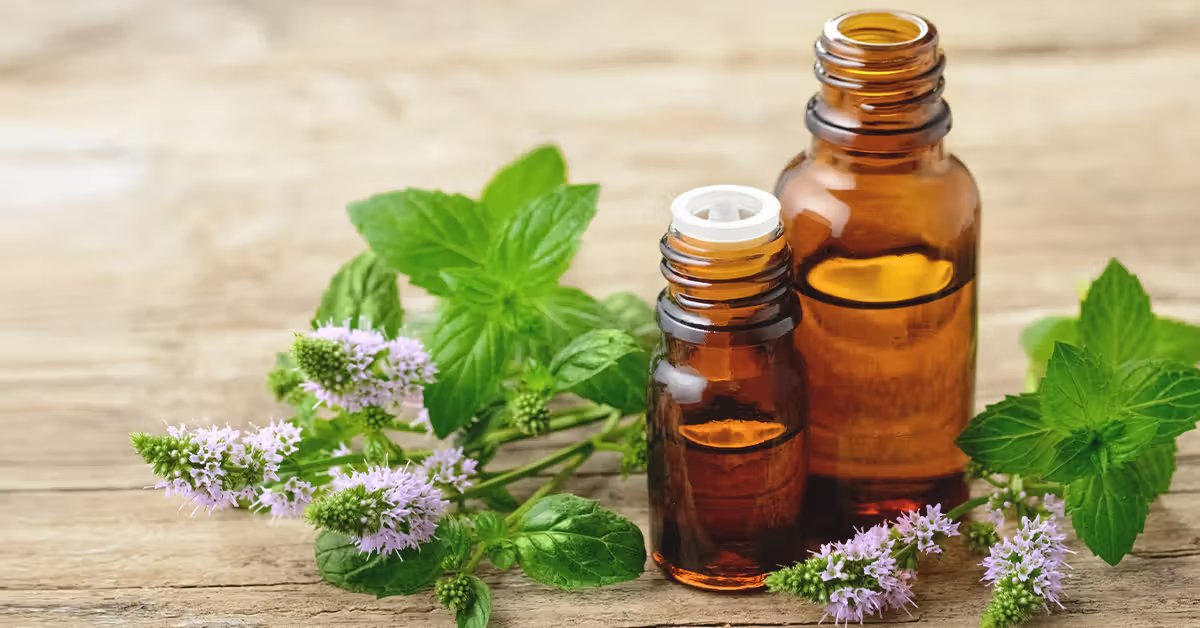
Peppermint oil is a concentrated essential oil extracted from the leaves of the peppermint plant, scientifically known as Mentha × piperita. This plant is a natural hybrid of watermint and spearmint and is widely cultivated for its aromatic, medicinal, and therapeutic properties.The essential oil is typically obtained through steam distillation of fresh peppermint leaves. It contains active compounds such as menthol, menthone, and menthyl acetate, which are responsible for its characteristic cooling sensation, refreshing aroma, and therapeutic effects.
FORMS:
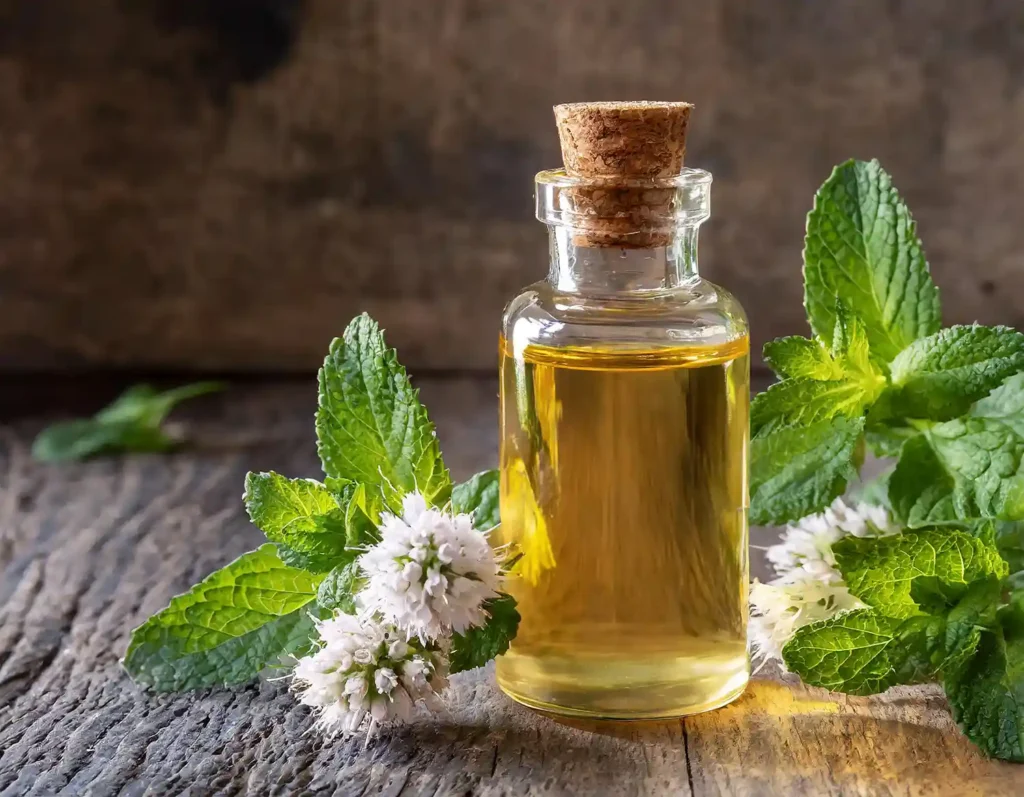
Essential Oil (Pure Peppermint Oil)
This is the most concentrated form, obtained through steam distillation of peppermint leaves. It is commonly used in:
Aromatherapy
Topical applications (when diluted with a carrier oil)
Massage blends
Hair and scalp treatments
Diluted Peppermint Oil
This form is pre-mixed with a carrier oil such as coconut oil, almond oil, or jojoba oil. It is safer for:
Direct skin application
Headache relief (temples/neck)
Muscle massage
Scalp massage
Peppermint Infused Oil
Prepared by soaking peppermint leaves in a carrier oil. It is milder than essential oil and commonly used for:
Hair care
Mild skin applications
Massage
HEALTH BENEFITS:

Digestive Support
Peppermint oil is well known for relieving:
Indigestion
Bloating
Gas
Abdominal cramps
Enteric-coated peppermint oil capsules are often used to help manage symptoms of Irritable Bowel Syndrome (IBS) by relaxing intestinal smooth muscles.
Headache & Migraine Relief
When diluted and applied to the temples or forehead, peppermint oil provides a cooling sensation that may help reduce tension headaches and migraine discomfort.
Respiratory Relief
The menthol in peppermint oil helps:
Clear nasal congestion
Ease sinus pressure
Soothe cough
It is commonly used in steam inhalation and chest balms.
Muscle & Joint Pain Relief
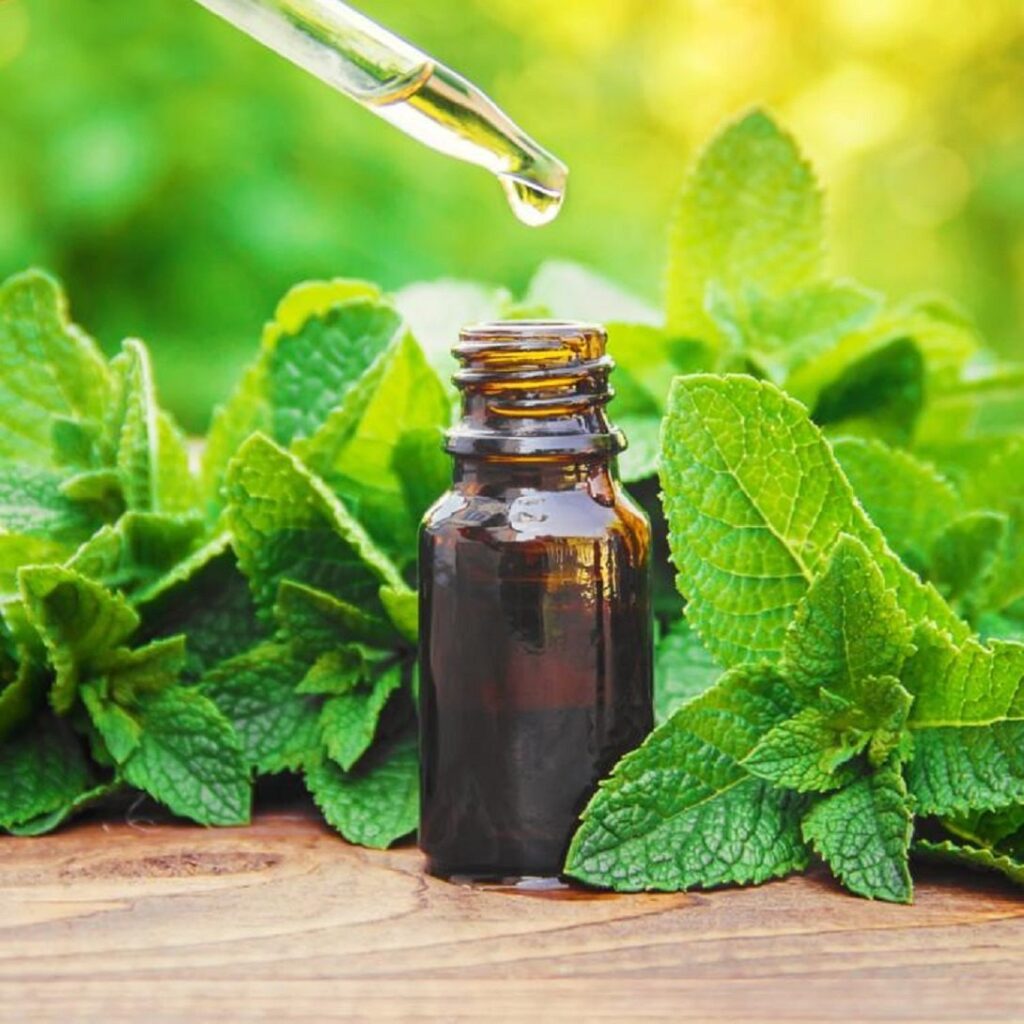
Due to its analgesic and anti-inflammatory properties, peppermint oil may help relieve:
Muscle soreness
Back pain
Joint stiffness
Sports-related discomfort
Hair & Scalp Health
Peppermint oil can:
Stimulate blood circulation to the scalp
Promote healthy hair growth
Reduce dandruff
Soothe itchy scalp
It is often added to hair oils and shampoos.
Skin Benefits
When properly diluted, it may help:
Soothe itching
Reduce mild skin irritation
Provide cooling relief in hot weather
Antimicrobial Properties
Peppermint oil exhibits antibacterial and antifungal activity, which makes it useful in oral care products and natural cleaning solutions.
Mental Alertness & Stress Relief
Its refreshing aroma may:
Improve focus and concentration
Reduce mental fatigue
Promote relaxation when used in aromatherapy
HOW TO USE:
For Headache Relief
Dilute 1–2 drops of peppermint essential oil in 1 teaspoon of carrier oil (coconut, almond, or jojoba oil).
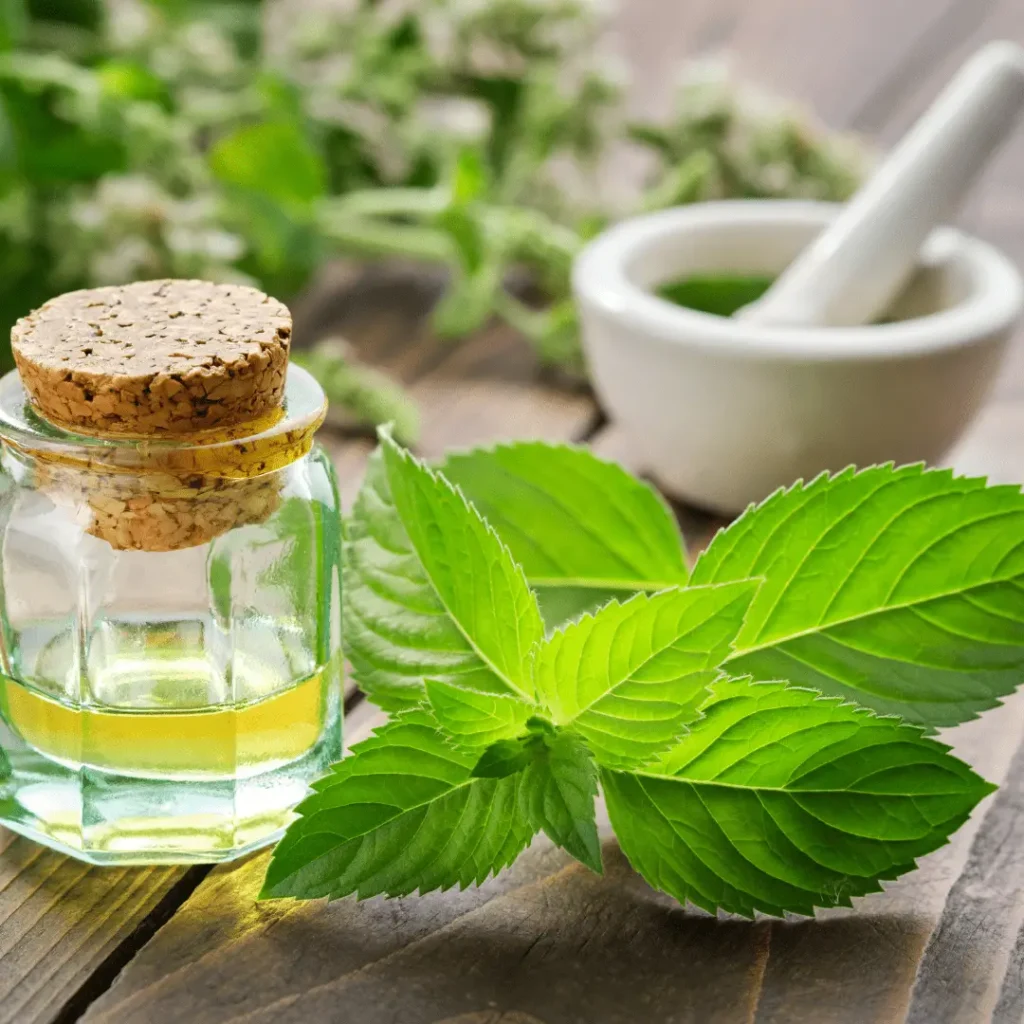
Apply gently to the temples, forehead, and back of the neck.
Avoid contact with eyes.
For Digestive Support
Option A: Topical Use
Mix 2–3 drops with a carrier oil.
Massage gently over the abdomen in circular motions.
Option B: Capsules (Internal Use)
Use enteric-coated peppermint oil capsules.
Take only as directed by a healthcare professional.
For Nasal Congestion & Sinus Relief
Add 2–3 drops to a bowl of hot water.
Inhale the steam for 5–10 minutes with eyes closed.
Alternatively, diffuse in a room using an essential oil diffuser.
For Muscle & Joint Pain
Dilute 3–4 drops in 1 tablespoon of carrier oil.
Massage onto sore muscles or stiff joints.
Use 1–2 times daily as needed.
For Hair & Scalp Care
Add 2–3 drops to 1 tablespoon of hair oil or shampoo.
Massage into the scalp for 5–10 minutes.
Leave for 20–30 minutes before washing.
Use 1–2 times weekly.
For Mental Alertness
Add 3–4 drops to a diffuser.
Inhale directly from the bottle for a quick refreshing effect.