



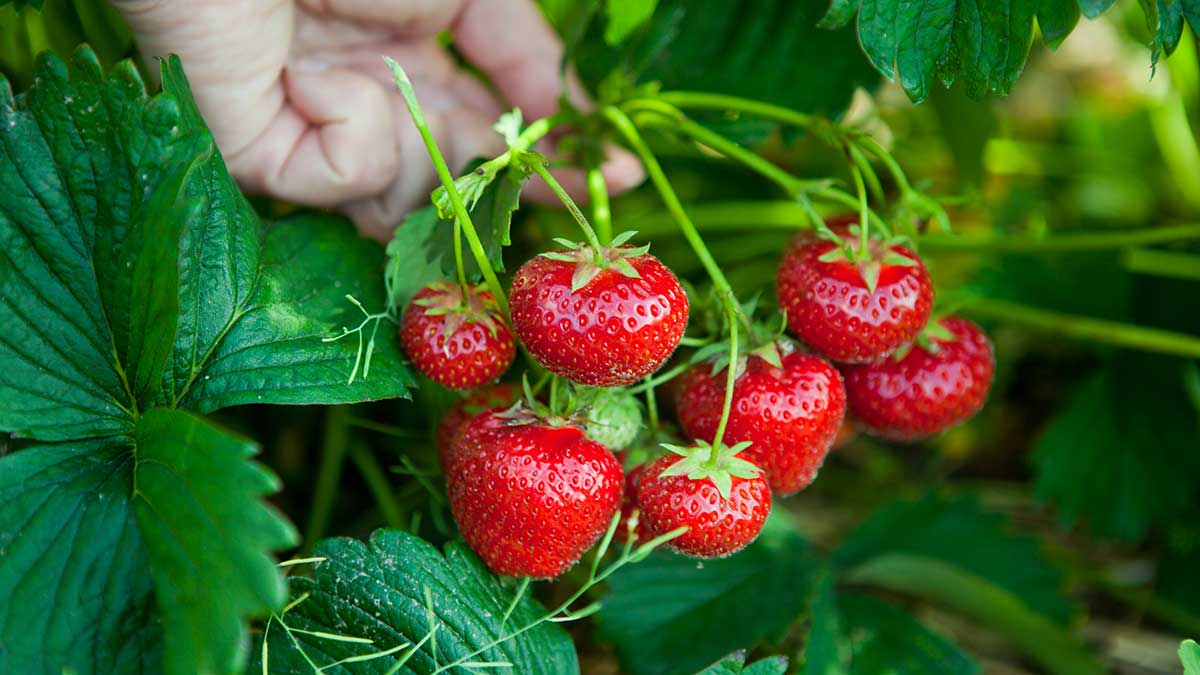
HEALTH BENEFITS:

Rich in Nutrients
Vitamins: High in Vitamin C (boosts immunity, skin health, and antioxidant protection).
Minerals: Contains manganese (important for bone health and metabolism), folate, and potassium.
Fiber: Supports digestion and helps regulate blood sugar.
2. Powerful Antioxidant Properties
Contain anthocyanins, ellagic acid, and quercetin.
Help neutralize free radicals, reducing oxidative stress and inflammation.
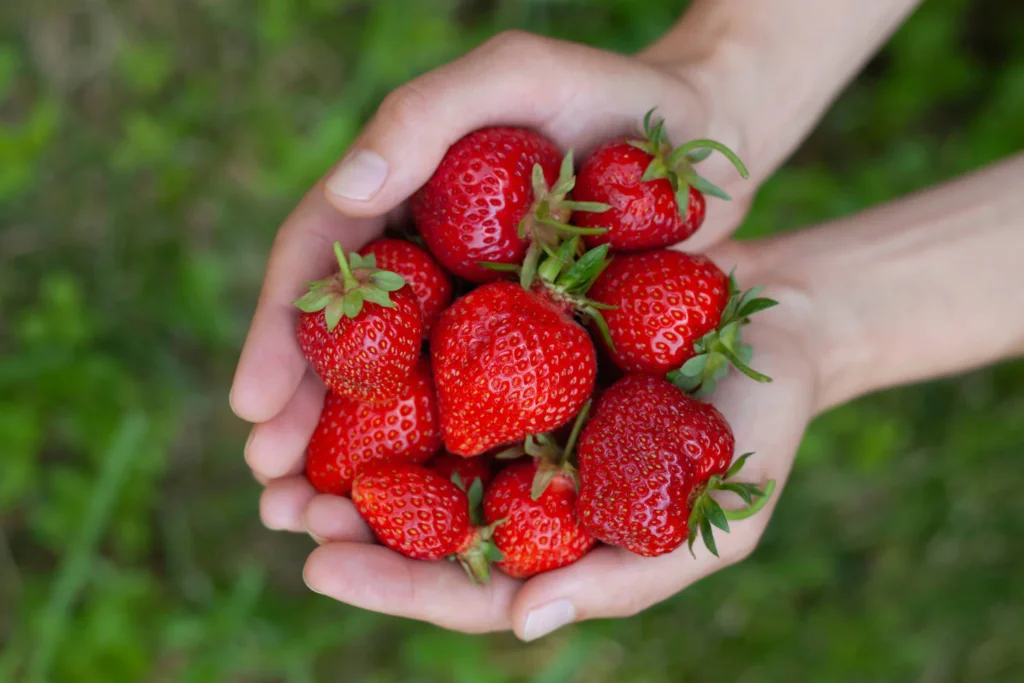
May lower the risk of chronic diseases like heart disease and certain cancers.
3. Heart Health
Anthocyanins can improve cholesterol levels and reduce blood pressure.
Fiber helps lower LDL (“bad”) cholesterol.
Potassium supports healthy blood pressure levels.
4. Blood Sugar Regulation
Low glycemic index fruit—won’t spike blood sugar as much as processed carbs.
Polyphenols in strawberries may improve insulin sensitivity.
5. Anti-Inflammatory Effects
Bioactive compounds reduce inflammation markers in the body.
Beneficial for conditions like arthritis and metabolic syndrome.
6. Weight Management
Low in calories but high in fiber—keeps you full longer.
Naturally sweet, making them a healthier alternative to sugary snacks.
7. Skin Health
Vitamin C supports collagen production for healthy, elastic skin.
Antioxidants help protect against UV damage and premature aging.
8. Brain Health
Antioxidants and flavonoids may improve cognitive function.
Can support memory and reduce age-related cognitive decline.
SIDE EFFECTS:

Allergic Reactions: Can range from mild (mouth itching, tingling, hives, congestion) to severe (throat swelling, difficulty breathing, anaphylaxis).
Digestive Issues: High fiber and fructose can cause bloating, gas, stomach cramps, or diarrhea, especially in large amounts.
Pesticide Residue: Non-organic strawberries can carry pesticide residue, emphasizing the need for thorough washing.
Blood Thinners: Strawberries can slow blood clotting, increasing bleeding risk with anticoagulant medications like warfarin or aspirin.
HOW TO USE:
Eat Fresh
Simply wash and eat them as a snack.
Best time: morning or as an afternoon snack for a natural energy boost.
Tip: Keep them in the fridge and consume within 2–3 days for maximum nutrient content.

2. Smoothies & Shakes
Blend strawberries with yogurt, milk, or plant-based milk.
Add a handful of spinach or a teaspoon of chia seeds for extra fiber and antioxidants.
Avoid adding too much sugar—strawberries are naturally sweet.
3. Salads
Slice strawberries into green salads for a sweet-tart flavor.
Pair with nuts, feta cheese, or avocado for healthy fats and protein.
4. Breakfast Boost
Add to oatmeal, cereal, or yogurt bowls.
Sprinkle with flaxseeds or hemp seeds for extra nutrients.

5. Freezing for Later Use
Wash, hull, and freeze strawberries in a single layer.
Great for smoothies or desserts when fresh strawberries aren’t in season.
6. Desserts & Healthy Treats
Use as a topping for whole-grain pancakes or waffles.
Make strawberry compote with minimal sweetener for a natural dessert option.
7. Strawberry Infused Water
Add slices of strawberries to water for a flavorful, low-calorie drink.
Can include mint, lemon, or cucumber for added refreshment.
8. As a Natural Face Mask
Mash strawberries and mix with honey or yogurt for a DIY antioxidant-rich face mask.
Helps with skin hydration and mild exfoliation.