



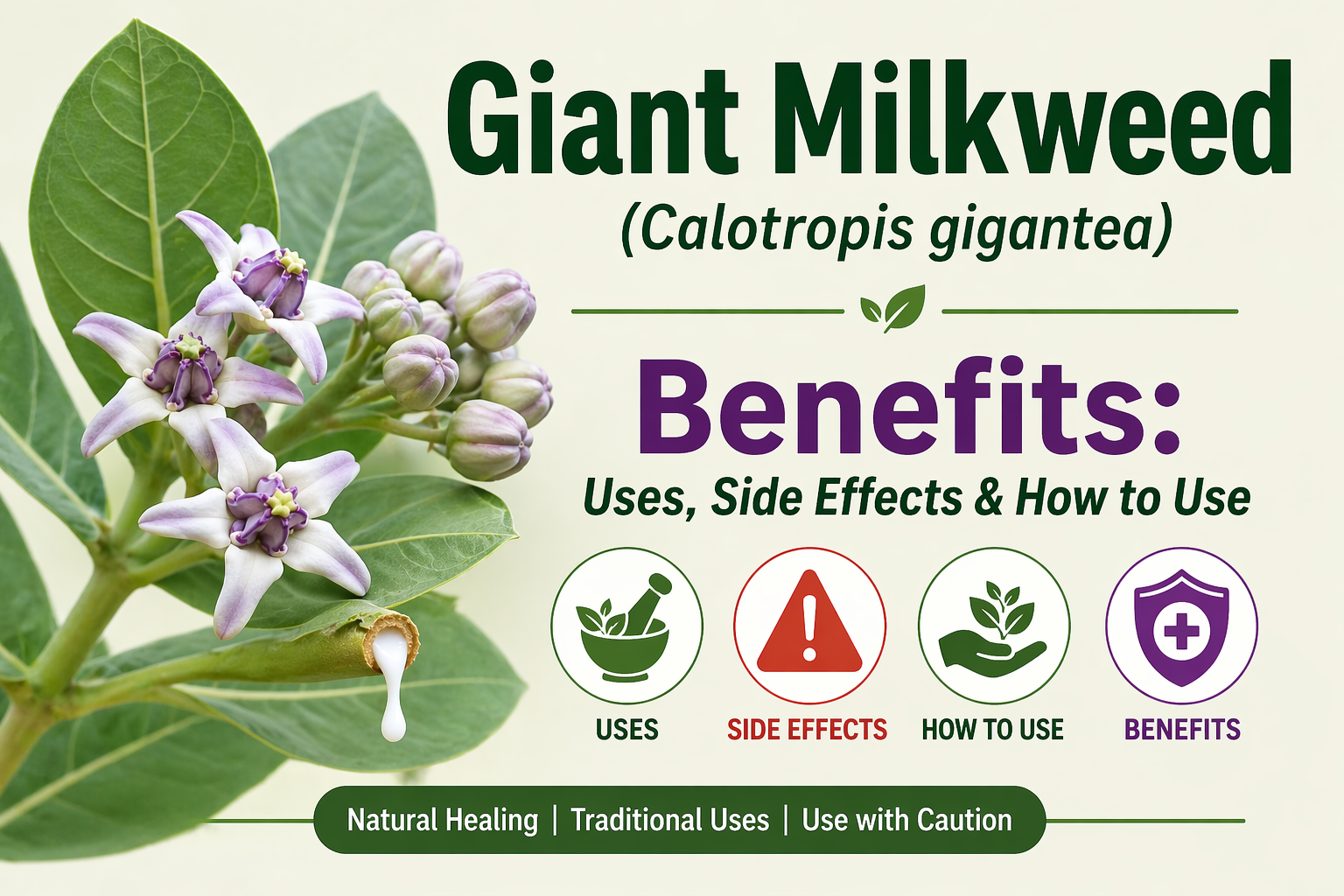
INTRODUCTION:
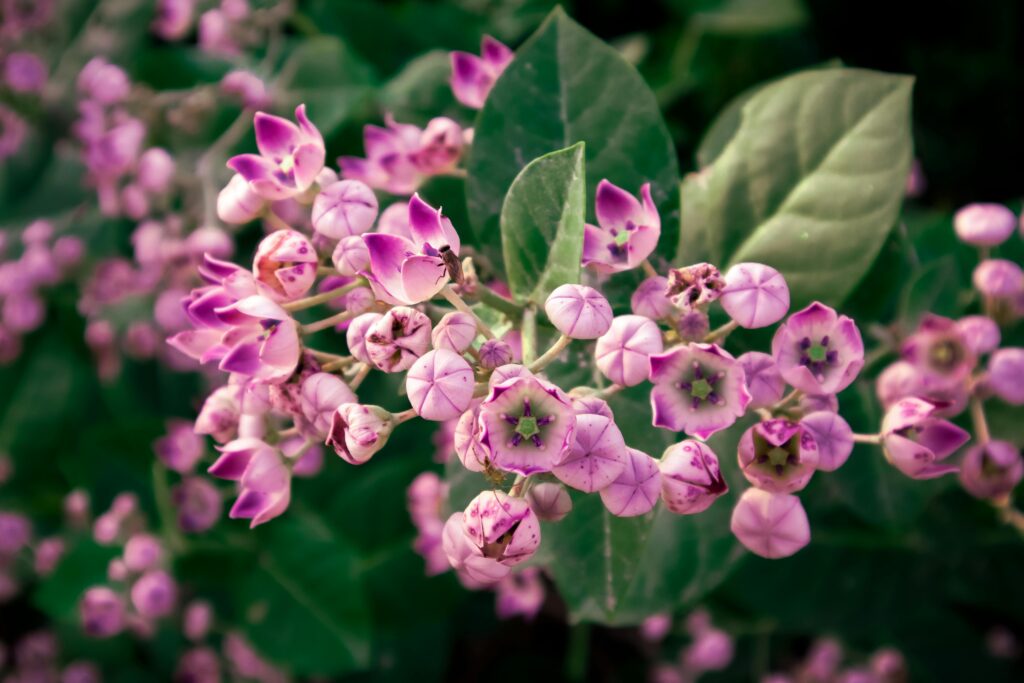
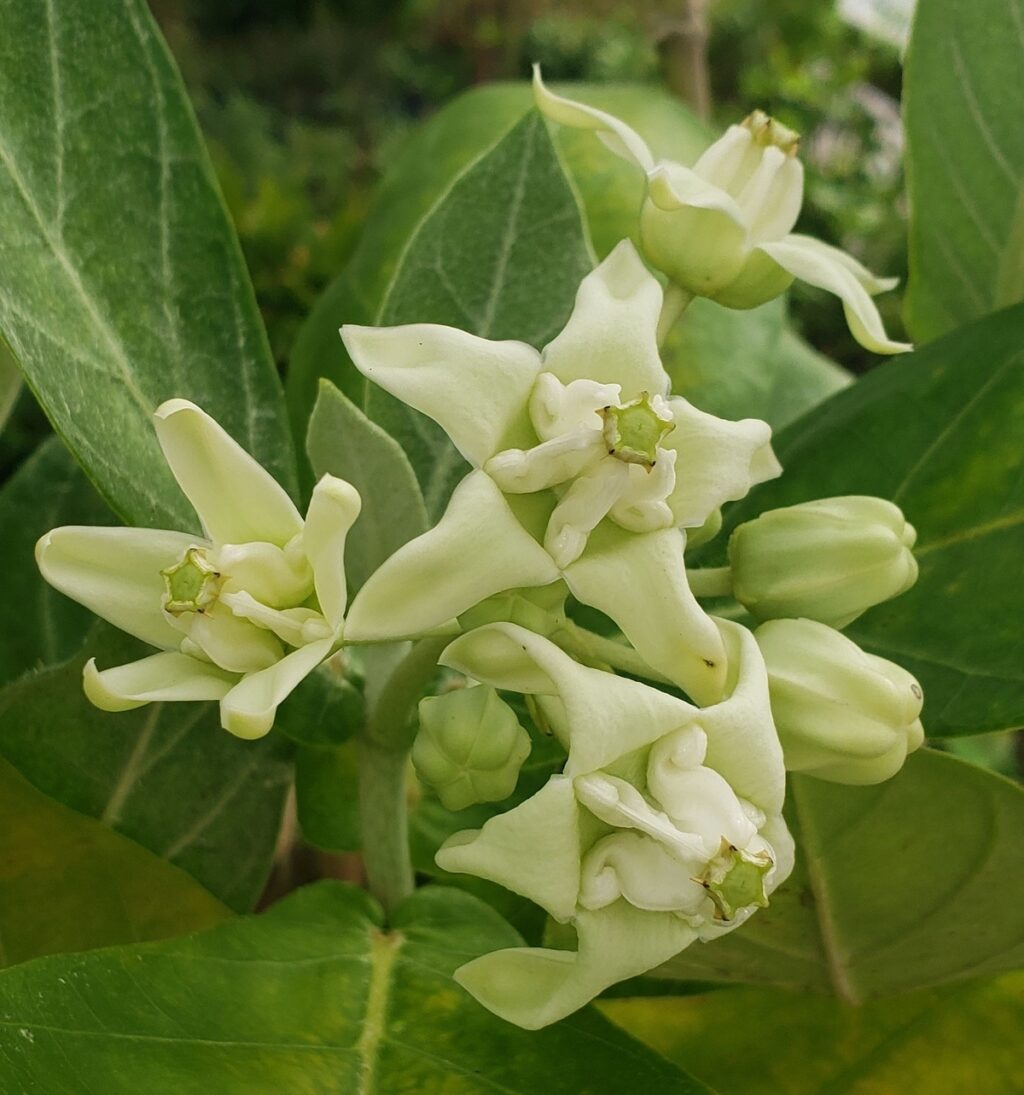
Giant Milkweed, scientifically known as Calotropis gigantea, is a large, evergreen shrub widely found in tropical and subtropical regions of Asia and Africa. It belongs to the Apocynaceae family, which is known for plants that produce milky latex sap.Commonly referred to as Crown Flower or Swallow-wort, this plant can grow up to 10–15 feet tall and thrives in dry, sandy soils with minimal care. It is easily recognized by its thick, pale green leaves and striking waxy flowers that appear in shades of white and lavender.One of the most distinctive features of giant milkweed is its milky white sap, which contains potent bioactive compounds. While this latex has been used in traditional medicine systems like Ayurveda for treating various ailments, it is also toxic if misused.
Important Minerals
Calcium (Ca)
Supports bone strength and plays a role in muscle and nerve function.
Potassium (K)
Helps regulate blood pressure, fluid balance, and heart function.
Magnesium (Mg)
Important for muscle relaxation, nerve signaling, and energy production.
Iron (Fe)
Essential for red blood cell formation and oxygen transport.
Phosphorus (P)
Works with calcium to maintain strong bones and teeth and supports cellular energy.
Sodium (Na) (in small amounts)
Helps maintain fluid balance and nerve function.
Health Benefits:

1. Anti-Inflammatory Properties
Giant Milkweed is known to help reduce swelling and inflammation. Pastes made from its leaves are traditionally applied to joint pain, sprains, and swelling.
2. Antimicrobial Effects
The plant contains compounds that may help fight bacteria and fungi, making it useful for minor skin infections, wounds, and ulcers.
3. Supports Respiratory Health
In traditional medicine, it is used to relieve symptoms of cough, asthma, and bronchitis by helping clear mucus and ease breathing.
4. Skin Care Benefits
Its extracts are sometimes used for treating skin issues like eczema, itching, and rashes due to its antiseptic and soothing effects.
5. Pain Relief (Analgesic)
It has natural pain-relieving properties and is used externally to reduce body aches and muscular discomfort.
6. Digestive Support
Small, controlled doses in traditional practices are believed to help with indigestion, constipation, and intestinal worms.
7. Potential Cardiovascular Effects
Some compounds in the plant are studied for their effects on the heart, though this area requires caution due to the presence of cardiac glycosides.
8. Wound Healing
Applied carefully, it may promote faster healing of cuts and wounds by reducing infection and inflammation.
USES:
1. Traditional Medicine
In systems like Ayurveda, different parts of the plant are used:
Leaves: Applied as a warm poultice for pain, swelling, and joint issues
Latex (milky sap): Used carefully for skin diseases, warts, and infections
Roots & bark: Traditionally used for digestive problems and respiratory issues
2. Skin Treatments
The plant is used externally for:
Eczema and rashes
Wounds and cuts
Insect bites and itching
Its antimicrobial nature helps protect against infection.
3. Respiratory Relief
In controlled traditional use, it is used to help manage:
Cough and cold
Asthma symptoms
Chest congestion
4. Fiber and Industrial Use
The bark of Giant Milkweed provides strong natural fiber, which is used for:
Making ropes, threads, and fishing nets
Stuffing material and coarse textiles
5. Religious and Cultural Use
Its flowers, often called Crown Flowers, are used in:
Garlands and decorations
Religious offerings in South Asia
Traditional ceremonies and rituals
6. Insecticidal Properties
The plant’s toxic compounds are used traditionally as a natural pesticide to protect crops from insects.
7. Veterinary Uses
In rural areas, it has been used in small, controlled amounts for treating animal skin diseases and parasites
SIDE EFFECTS:

1. Skin Irritation & Allergic Reactions
The milky latex (sap) can cause redness, itching, burning, and rashes
Prolonged contact may lead to blistering or dermatitis
2. Eye Damage
Contact with eyes can result in severe irritation, pain, and temporary vision problems
In some cases, it may cause corneal injury
3. Toxic if Ingested
Internal consumption can cause:
Nausea and vomiting
Diarrhea
Abdominal pain
In high doses, it may be poisonous and life-threatening
4. Heart-Related Risks
Contains cardiac glycosides, which can affect heart function
May lead to irregular heartbeat (arrhythmia) if misused
5. Nervous System Effects
High exposure may cause dizziness, confusion, or weakness
6. Risk During Pregnancy & Breastfeeding
Not considered safe
May pose risks to mother and baby
7. Toxic to Animals
Can be poisonous to livestock and pets if consumed accidentally
HOW TO USE:
1. Leaf Poultice (External Use)
Best for: Pain, swelling, joint issues
How to use:
Take fresh leaves and warm them slightly
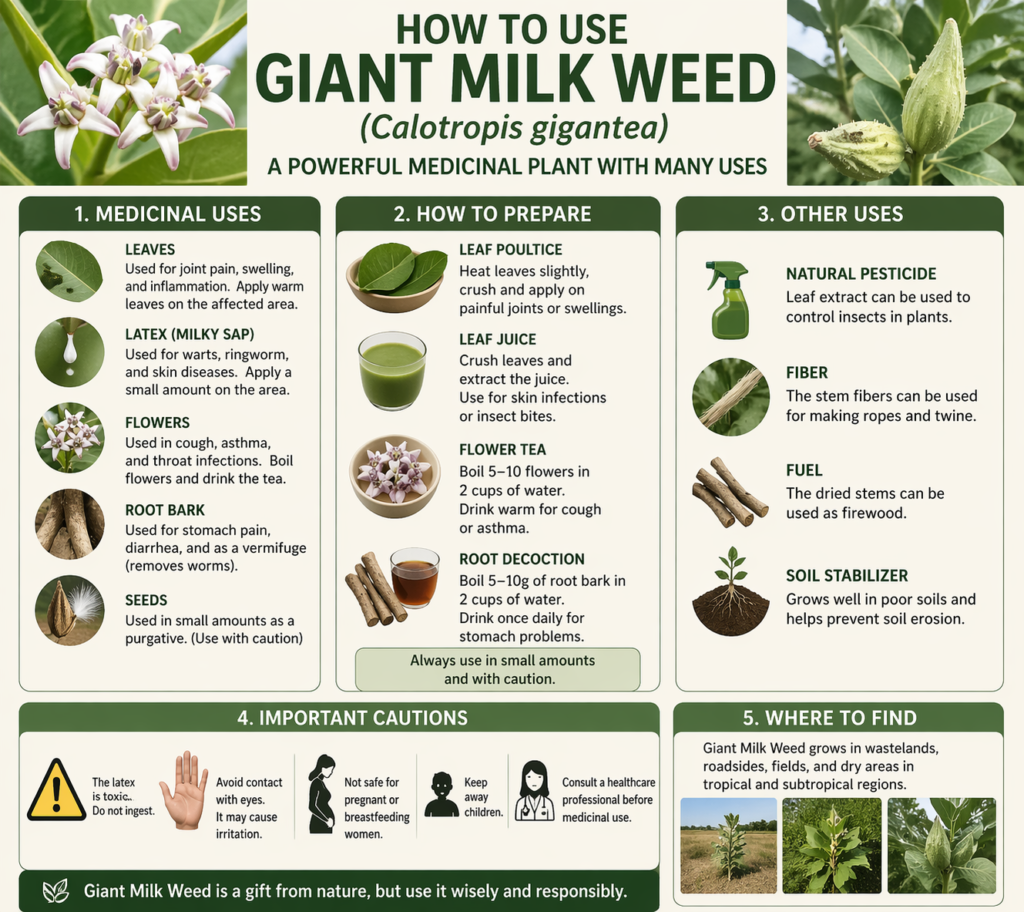
Apply directly to the affected area
Secure with a cloth for 15–30 minutes
Helps reduce inflammation and pain
2. Latex (Sap) Application (Very Limited Use)
Best for: Warts, skin infections (traditional use)
How to use:
Apply a tiny amount directly on the affected area
Avoid surrounding healthy skin
Highly irritating — improper use can burn skin
3. Powder (Dried Leaves/Roots)
Best for: Traditional remedies (under expert guidance)
How to use:
Leaves or roots are dried and ground into powder
Used in very small doses in herbal formulations
Internal use should only be done by professionals
4. Decoction (Herbal Preparation)
Best for: Respiratory or digestive issues (traditional systems)
How to use:
Boil plant parts (usually roots or bark) in water
Strain and consume in controlled amounts
Risky if self-prepared — dosage is critical
5. Cultural & Religious Use
Flowers (Crown Flowers) are used in garlands and rituals
Safe as they are used externally for decoration
6. Veterinary & Traditional Rural Use
Applied in small amounts for animal skin conditions
Used only by experienced practitioners
Important Safety Guidelines
Always wear gloves when handling
Avoid contact with eyes and sensitive skin
Never consume without expert supervision
Keep away from children and pets
SUMMARY:
Calotropis gigantea, known as Giant Milkweed or Crown Flower, is a tropical shrub from the Apocynaceae. It is valued in Ayurveda for its anti-inflammatory, antimicrobial, and pain-relieving properties. Traditionally, it is used as leaf poultices, latex applications, powders, and decoctions to treat pain, skin issues, and respiratory problems. Its flowers are used in cultural rituals, and its fibers have practical uses. However, the plant is toxic if misused, especially its milky latex, so careful handling and expert guidance are essential.