



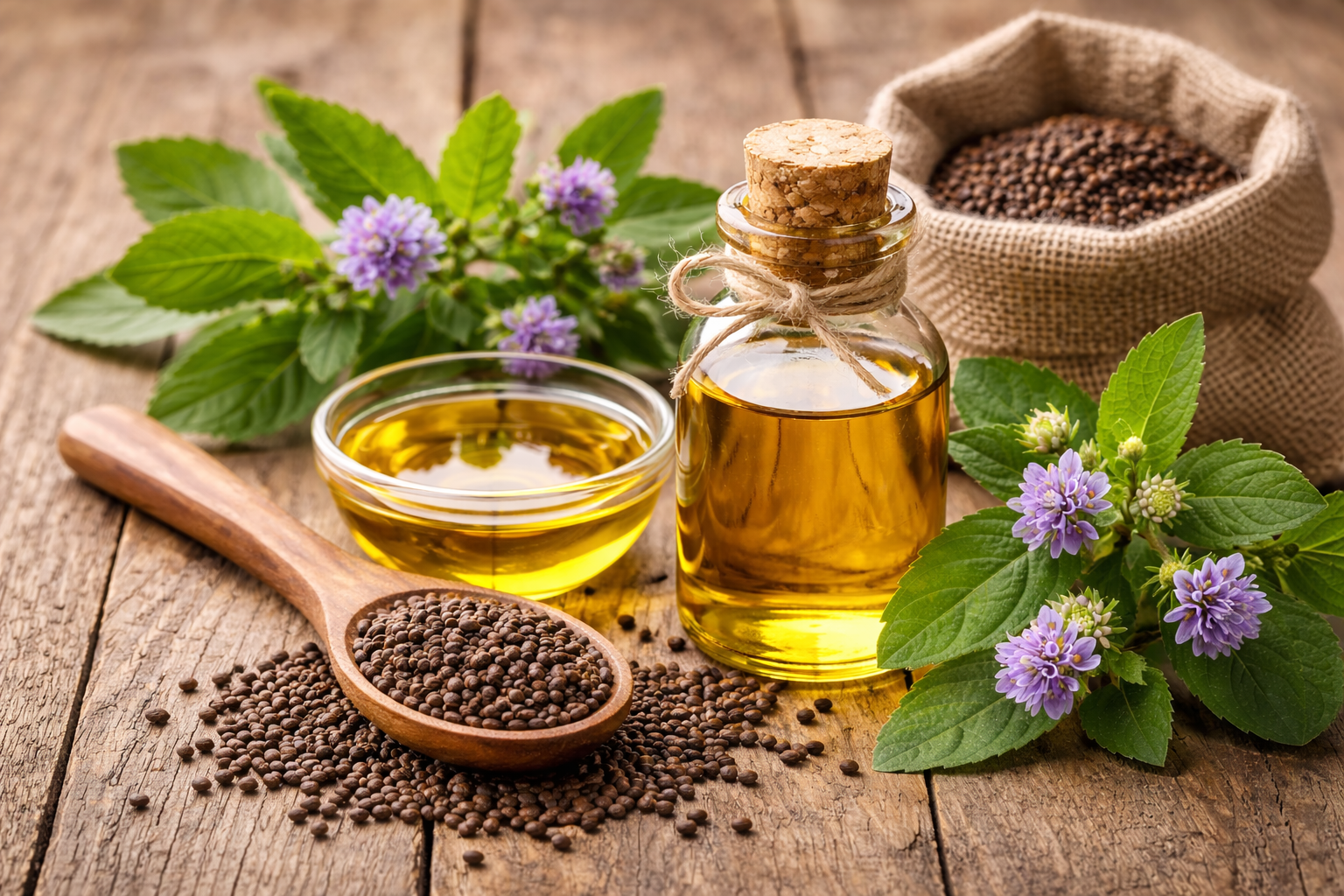
INTRODUCTION:
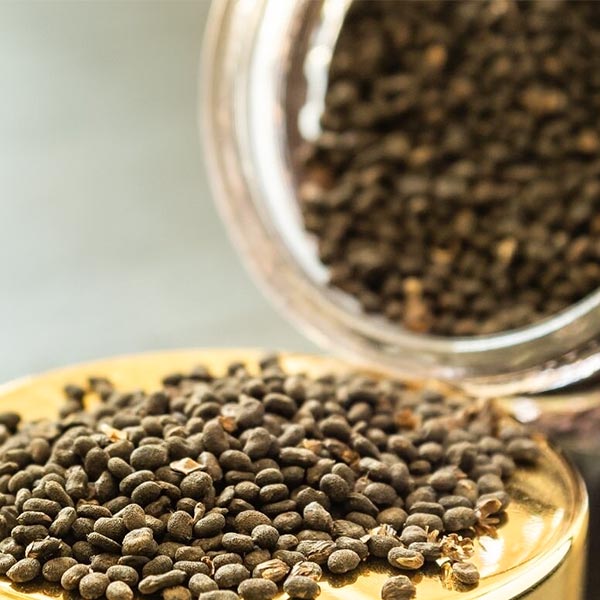
Babchi Oil is a traditional herbal oil extracted from the seeds of the Psoralea corylifolia, a medicinal plant widely used in Ayurveda and Unani systems of medicine. The plant is commonly known as Babchi or Bakuchi and is valued for its powerful skin-healing and rejuvenating properties.The oil is typically prepared by cold-pressing or infusing Babchi seeds into a carrier oil such as sesame oil or coconut oil. It contains bioactive compounds, most notably psoralen and bakuchiol, which are known for their therapeutic effects on various skin conditions.
FORMS:
Pure Babchi Seed Oil (Cold-Pressed)
Extracted directly from Babchi seeds.
Highly concentrated.
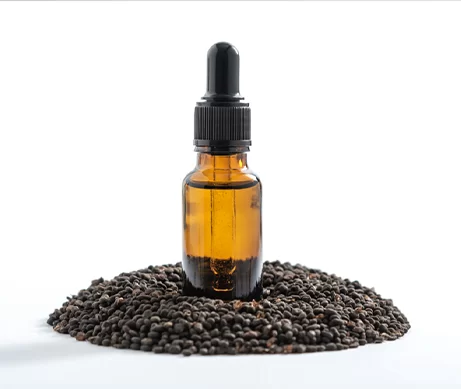
Primarily used for topical skin applications.
Must be diluted before use due to its potency.
Infused Babchi Oil
Babchi seeds infused in carrier oils such as sesame oil or coconut oil.
Milder compared to pure extract.
Commonly used in traditional Ayurvedic formulations.
Babchi Essential Oil (Concentrated Extract)
Highly potent form.
Used in very small quantities.
Often blended in skincare products.
Requires professional supervision.
Babchi Oil Capsules (Internal Use)
Standardized extracts in capsule form.
Used under medical supervision in Ayurvedic practice.
Not recommended without expert guidance.
Babchi Oil-Based Creams & Ointments
Combined with herbal extracts for skin disorders.
Used for vitiligo, eczema, and psoriasis.
Available in ready-made dermatological preparations.
HEALTH BENEFITS:

1. Supports Treatment of Vitiligo (Leucoderma)
Babchi Oil is traditionally used to stimulate melanin production in depigmented skin patches. Its active compound psoralen increases skin sensitivity to sunlight, helping restore pigmentation when used carefully under supervision.
2. Helps Manage Psoriasis & Eczema
Due to its anti-inflammatory and antimicrobial properties, Babchi Oil may reduce itching, redness, scaling, and chronic skin irritation.
3. Natural Anti-Aging Properties
Babchi contains bakuchiol, a plant-based compound known as a natural alternative to retinol. It:
Promotes collagen production
Improves skin elasticity
Reduces fine lines and wrinkles
Enhances overall skin texture
4. Treats Fungal & Bacterial Infections
The oil exhibits antimicrobial activity, making it useful for minor fungal infections and certain bacterial skin issues.
5. Reduces Acne & Blemishes
Its antibacterial and skin-regenerating effects help:
Control acne-causing bacteria
Reduce dark spots
Improve uneven skin tone
6. Promotes Hair Health
In traditional applications, Babchi Oil is sometimes used on the scalp to:
Strengthen hair roots
Reduce dandruff
Support healthy hair growth
7. Skin Rejuvenation (Rasayana Effect)
In Ayurveda, Babchi is considered rejuvenating. It helps detoxify skin tissue and improve overall complexion.
HOW TO USE:
1. For Vitiligo (Under Professional Supervision)
Dilute Babchi Oil with a carrier oil (such as coconut or sesame oil) in a 1:5 ratio.
Apply a small amount directly to affected areas.
Mild, controlled sun exposure (5–10 minutes) may be recommended by practitioners.
Use only under medical or Ayurvedic supervision due to its photosensitizing effect.
2. For Psoriasis & Eczema
Mix a few drops of Babchi Oil with a carrier oil.
Apply gently to the affected area once daily.
Perform a patch test before regular use.
3. For Acne & Skin Rejuvenation
Add 1–2 drops to your regular moisturizer or facial oil.
Apply at night to avoid sun sensitivity.
Use 2–3 times per week initially.
4. As an Anti-Aging Treatment (Bakuchiol Effect)
Use diluted oil or a bakuchiol-based serum.
Apply at night after cleansing.
Follow with a moisturizer.
Always apply sunscreen during the day.
5. For Scalp & Hair
Mix Babchi Oil with coconut oil.
Massage gently into the scalp.
Leave for 30–60 minutes before washing.
Use once or twice weekly.